




Introduction
Polycarbonate roof screws are crucial for securely installing polycarbonate roofing sheets. These screws are specifically designed to address the unique properties of polycarbonate materials such as flexibility and thermal expansion, ensuring a durable, weather-resistant installation. This guide will help you understand the different types of polycarbonate roof screws, their applications, installation process, and maintenance tips to ensure your roofing project is secure and long-lasting.
1. What Are Polycarbonate Roof Screws? Understanding the Basics
1. Definition and Function of Polycarbonate Roof Screws
Polycarbonate roof screws are specially designed to fasten polycarbonate roofing sheets to a structure. These screws are made to accommodate the unique properties of polycarbonate, such as its ability to expand and contract with temperature changes.
2. How Polycarbonate Roof Screws Differ from Regular Screws
Unlike regular screws, polycarbonate roof screws are specifically designed to prevent cracking and other damage to polycarbonate sheets. They are usually equipped with a rubber gasket or washer to create a tight, leak-proof seal.
3. Why Polycarbonate Roof Screws Are Essential for Roofing Projects
Polycarbonate roofing sheets have a high thermal expansion rate, and regular screws cannot handle this without damaging the material. Polycarbonate roof screws provide a secure and weather-resistant solution, ensuring the roof stays intact and performs well over time.
2. Types of Polycarbonate Roof Screws
1. Self-Tapping vs. Drilling Polycarbonate Roof Screws
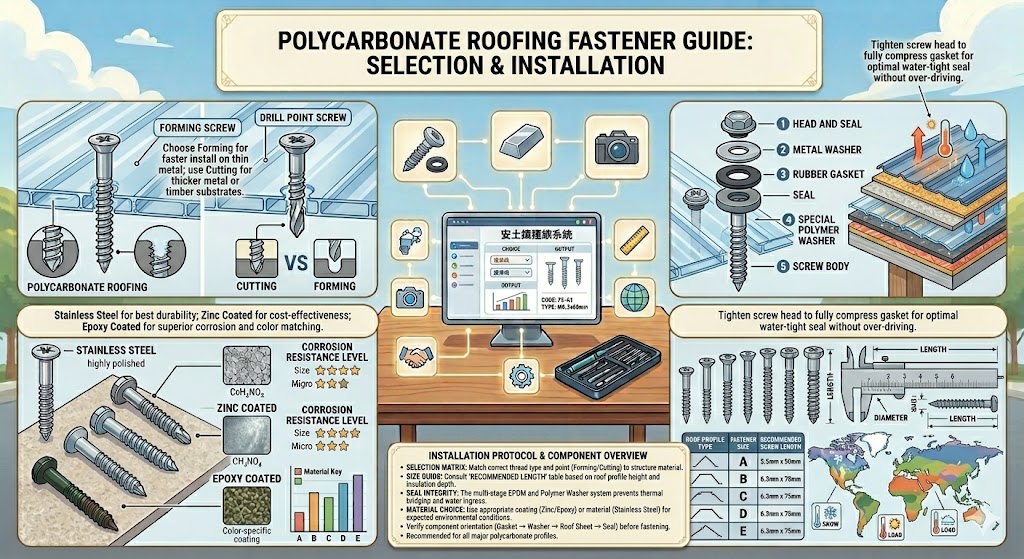
Self-Tapping Screws: These screws create their own hole as they are driven in, which is ideal for quick installation on polycarbonate sheets.
Drilling Screws: These screws require pre-drilled holes in the polycarbonate sheets, ensuring a more precise fit and reducing the risk of material cracking.
2. Different Materials Used in Polycarbonate Roof Screws
Polycarbonate roof screws are typically made from corrosion-resistant materials such as stainless steel or zinc-coated metals, which are ideal for outdoor use where they will be exposed to moisture and varying weather conditions.
3. The Role of Gaskets and Washers in Polycarbonate Roof Screws
Polycarbonate roof screws are often equipped with gaskets or washers that help ensure a tight seal, preventing water leaks and improving the overall durability of the installation.
4. Choosing the Right Size and Length for Polycarbonate Roofing
When selecting screws, consider the thickness of the polycarbonate sheets and the size of the roofing structure. The screw should be long enough to secure the sheet without piercing the opposite side of the material.
3. Applications of Polycarbonate Roof Screws
1. Polycarbonate Roof Screws for Residential Roofing
Polycarbonate roof screws are ideal for residential roofing projects, particularly for conservatories, patios, and skylights. They ensure a secure and weather-resistant roof that maintains insulation and structural integrity.
2. Commercial and Industrial Roofing Projects Using Polycarbonate Roof Screws
In commercial and industrial settings, polycarbonate roof screws are used to install large polycarbonate panels. They help ensure the stability and durability of roofs, especially in areas prone to extreme weather conditions.
3. The Use of Polycarbonate Roof Screws for Greenhouses and Outdoor Structures
Polycarbonate is a popular material for greenhouses, and these screws are essential for securely attaching roofing sheets, ensuring long-term protection against the elements.
4. How Polycarbonate Roof Screws Ensure Durability and Stability in Various Roofing Projects
Polycarbonate roof screws are designed to handle the expansion and contraction of polycarbonate sheets, ensuring that the roofing remains stable and secure, even under harsh weather conditions.
4. Polycarbonate Roof Screws Installation Process
1. Preparing the Polycarbonate Sheets and Roof Surface for Installation
Before installing the screws, clean the polycarbonate sheets and roof surface to remove any dust, dirt, or debris that could affect the seal.
2. Step-by-Step Installation of Polycarbonate Roof Screws
Drill holes slightly larger than the screw diameter in the polycarbonate sheets.
Insert the screw and tighten it gently to avoid over-tightening, which could damage the sheet.
Install washers and gaskets to create a waterproof seal around the screws.
3. Common Mistakes to Avoid During the Installation of Polycarbonate Roof Screws
Avoid over-tightening the screws, as this can lead to cracking or damaging the polycarbonate sheets. Ensure that the screws are properly aligned and that the washers are correctly placed.
4. How to Ensure Tight and Leak-Proof Sealing with Polycarbonate Roof Screws
Use high-quality gaskets and washers, and ensure that the screws are installed tightly enough to prevent water infiltration but not so tight that they damage the polycarbonate material.
5. Maintenance and Care of Polycarbonate Roof Screws
1. Regular Checks and Inspections for Polycarbonate Roof Screws
Periodically inspect the screws for signs of rust, corrosion, or loosening. Ensure that the gaskets and washers are intact and that the screws remain securely fastened.
2. How to Prevent Rusting or Corrosion of Polycarbonate Roof Screws
Use corrosion-resistant materials such as stainless steel for screws and perform regular cleaning to prevent build-up of grime or salt, particularly in coastal areas.
3. Tips for Cleaning Polycarbonate Roof Screws and Maintaining Their Longevity
Clean the screws regularly with mild detergent and water. Avoid harsh chemicals that could damage the surface of the screw or polycarbonate sheet.
4. How to Replace Damaged Polycarbonate Roof Screws Without Causing Roof Leaks
If a screw becomes damaged or loosened, replace it with a new screw of the same size and material to maintain the integrity of the seal and prevent water leakage.
6. Benefits of Using Polycarbonate Roof Screws
1. Polycarbonate Roof Screws Enhance Roof Strength and Security
Polycarbonate roof screws provide a secure and durable fastening system that holds the polycarbonate sheets in place, enhancing the overall strength and stability of the roof.
2. The Advantages of Weather Resistance and Longevity in Polycarbonate Roof Screws
Made from corrosion-resistant materials, polycarbonate roof screws withstand harsh weather conditions, ensuring a longer-lasting and more secure roofing system.
3. Cost-Effectiveness of Using Polycarbonate Roof Screws Over Time
Investing in high-quality polycarbonate roof screws can save you money in the long run by reducing maintenance costs and the likelihood of repairs or replacements due to poor installation.
4. Polycarbonate Roof Screws vs. Traditional Screws: Why They Are a Better Option
Polycarbonate roof screws are specifically designed for use with polycarbonate sheets, ensuring a secure fit and durability that regular screws cannot provide.
7. Common Issues with Polycarbonate Roof Screws and How to Solve Them
1. Problems with Over-Tightening Polycarbonate Roof Screws
Over-tightening polycarbonate roof screws can cause cracking or deforming of the polycarbonate sheets. Always ensure the screws are tightened just enough to secure the sheets without causing damage.
2. Ensuring Proper Sealing Around Polycarbonate Roof Screws
To avoid leaks, make sure to use proper gaskets and washers. Tighten the screws securely but avoid over-tightening.
3. How to Address Issues with Loose Polycarbonate Roof Screws
If screws become loose over time, retighten them and inspect the seals for any wear or tear.
4. How to Prevent Water Leakage Due to Improper Polycarbonate Roof Screw Installation
Proper installation is key to preventing water leakage. Make sure that the screws are installed according to guidelines, with appropriate gaskets and washers to seal the holes.
8. Choosing the Right Supplier for Polycarbonate Roof Screws
1. Factors to Consider When Choosing a Polycarbonate Roof Screw Supplier
Look for suppliers with a good reputation and quality products. Consider their experience, product range, and customer service.
2. How to Compare Prices and Quality of Polycarbonate Roof Screws
Compare prices across different suppliers while also checking for the quality of the screws, including the material used and any warranties offered.
3. The Importance of Warranty and Customer Support for Polycarbonate Roof Screws
Choose a supplier that offers a warranty for their products, ensuring that you have support if any issues arise with the screws over time.
4. How to Ensure You Are Getting the Best Deal for Your Polycarbonate Roofing Project
Ensure you are getting the best deal by checking for discounts, bulk pricing, and quality assurance from suppliers. Compare prices and reviews before making a purchase.
Conclusion
Polycarbonate roof screws are an essential component for securely and efficiently installing polycarbonate roofing sheets. They are specifically designed to accommodate the unique properties of polycarbonate materials, such as flexibility and expansion, while ensuring a durable and weather-resistant installation. By choosing the right type, size, and material, and following proper installation techniques, you can ensure the longevity and effectiveness of your polycarbonate roofing project.
Common FAQ
Q1: What makes polycarbonate roof screws different from regular screws?
A: Polycarbonate roof screws are specifically designed to withstand the unique properties of polycarbonate sheets, such as thermal expansion, and offer a weather-resistant, secure fastening solution. They also typically include gaskets or washers for better sealing and preventing leaks.
Q2: How do I choose the right size polycarbonate roof screw?
A: The right size screw depends on the thickness of the polycarbonate sheet and the type of roofing project. It is important to select a screw long enough to secure the sheets without penetrating through the other side of the material.
Q3: How do I install polycarbonate roof screws correctly?
A: Ensure the roof surface and polycarbonate sheets are clean and dry. Use the correct size screw and drill a hole in the polycarbonate sheet slightly larger than the screw to accommodate thermal expansion. Tighten the screw, ensuring it is secure but not over-tightened to avoid cracking the polycarbonate.
Q4: How do I maintain polycarbonate roof screws?
A: Regularly check the screws for signs of rust or corrosion, especially in coastal areas or harsh weather conditions. Clean the screws occasionally and replace any that are damaged or loose. It is also recommended to inspect the screws during the annual roof check-up.
Q5: Can polycarbonate roof screws cause leaks if not installed correctly?
A: Yes, improper installation, such as over-tightening or under-tightening, can lead to leaks. It’s important to follow proper installation procedures and ensure the screws are sealed correctly to prevent water infiltration.